v5.2 · THE RULES LAYER · OUT NOWv5.2 · LA CAPA DE REGLAS · DISPONIBLE YA
TURBO FLOW
Agents build. Humans merge.Los agentes construyen. Los humanos fusionan.
One product lives here: rig-lite — the rules layer for AI-written code. A portable governance kit: a fail-closed cross-model review gate, a written constitution, git-versioned memory. It ships no harness, installs nothing, and depends only on bash — drop it into any repo and your agents get laws with teeth. Un producto vive aquí: rig-lite — la capa de reglas para código escrito por IA. Un kit portátil de gobernanza: una compuerta de revisión entre modelos que falla cerrada, una constitución escrita, memoria versionada en git. No trae harness, no instala nada, solo depende de bash — agrégalo a cualquier repo y tus agentes tienen reglas con dientes.
The whole story, in one paragraph: Turbo Flow is an open-source project by Adventure Wave Labs (Marcus Patman). Versions 1–4 (2025–2026) packaged an agentic development environment around Claude Code and Ruflo — at its peak, 215+ MCP tools and 60+ agents. In September 2026 the project pivoted to a thinner, governed approach, and by v5.2 (October 2026) the orchestration stack was fully removed: Turbo Flow v5 is now the rules layer (rig-lite), and the integrated successor, Turbo Rig, runs in private beta. The v4 era stays fully recoverable in the version tags; the full reasoning lives in why Turbo Flow became Turbo Rig. Toda la historia, en un párrafo: Turbo Flow es un proyecto open source de Adventure Wave Labs (Marcus Patman). Las versiones 1–4 (2025–2026) empaquetaban un entorno de desarrollo agéntico alrededor de Claude Code y Ruflo — en su punto más alto, 215+ herramientas MCP y 60+ agentes. En septiembre de 2026 el proyecto pivotó a un enfoque más delgado y gobernado, y para la v5.2 (octubre de 2026) el stack de orquestación se eliminó por completo: Turbo Flow v5 es ahora la capa de reglas (rig-lite), y el sucesor integrado, Turbo Rig, corre en beta privada. La era v4 sigue recuperable en los tags de versiones; el razonamiento completo vive en por qué Turbo Flow se convirtió en Turbo Rig.
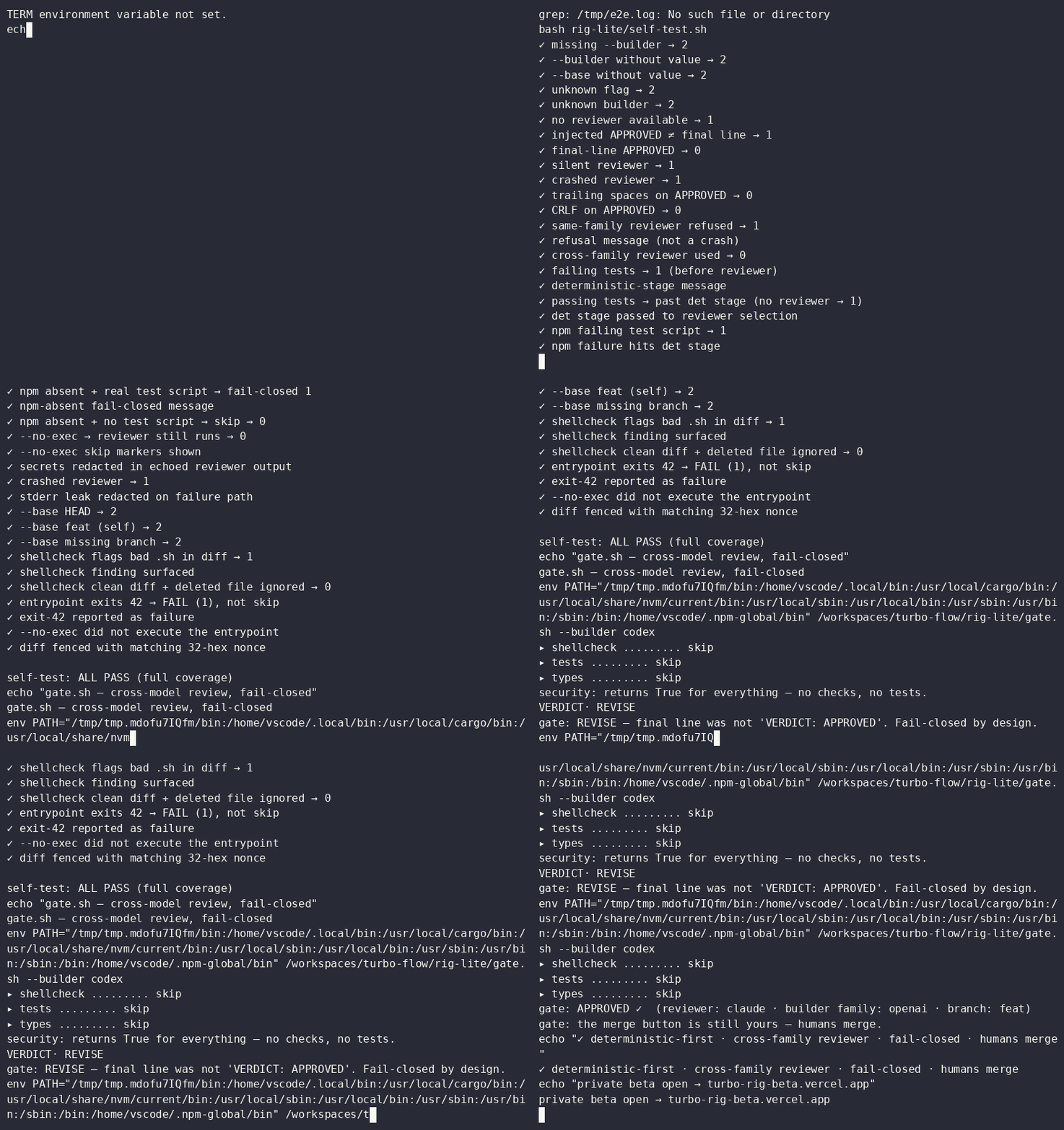
The real thing, not a mockup: a clean Codespace boots this repo's devcontainer and the kit proves itself in-container — the fail-closed self-test suite and a live gate run (reviewer CLI stubbed; no API keys on the recording box). Reproducible via demo/record-rig-lite-demo.sh. La cosa real, no un mockup: un Codespace limpio arranca el devcontainer de este repo y el kit se demuestra dentro del contenedor — la suite de self-tests que falla cerrada y una corrida en vivo de la compuerta (CLI revisor simulado; sin API keys en la máquina de grabación). Reproducible con demo/record-rig-lite-demo.sh.
Three doors — pick yoursTres puertas — elige la tuya
rig-lite, standalonerig-lite, independiente
Your agents have hundreds of tools. Nothing says no. Drop in
gate.sh (cross-model review), the constitution template, and the memory
pattern — works in any repo, zero dependencies, self-test suite included.
Tus agentes tienen cientos de herramientas. Nada dice no. Agrega
gate.sh (revisión entre modelos), la plantilla de constitución, y el patrón
de memoria — funciona en cualquier repo, cero dependencias, suite de self-tests incluida.
Why it became Turbo RigPor qué se convirtió en Turbo Rig
215+ tools and 60+ agents — then almost all of it was deleted. What orchestration couldn't solve, governance did. The full version history, the reasoning, and the research behind it. 215+ herramientas y 60+ agentes — y luego casi todo se borró. Lo que la orquestación no pudo resolver, lo resolvió la gobernanza. La historia completa de versiones, el razonamiento, y la investigación detrás.
the essay →Turbo Rig — private betaTurbo Rig — beta privada
The kit as one always-on system: integrated gate, constitution, git-versioned memory, automations across your repos — the successor Turbo Flow is becoming. See exactly how it differs → El kit como un solo sistema siempre activo: compuerta integrada, constitución, memoria versionada en git, automatizaciones entre tus repos — el sucesor en el que Turbo Flow se convierte. Mira exactamente en qué difiere →
Request access →Solicitar acceso →# 1 · onboard the repo (writes a thin AGENTS.md, never clobbers) bash /path/to/turbo-flow/rig-lite/init-repo.sh # 2 · prove the kit on your machine (fail-closed self-tests) bash /path/to/turbo-flow/rig-lite/self-test.sh # 3 · gate your first PR — builder = whichever CLI built it /path/to/turbo-flow/rig-lite/gate.sh --pr 1 --builder zcode # want the 30-second container tour? open the repo in a Codespace — # postCreate runs the self-test. that's the whole install surface.
Go deeper — every page, one questionProfundiza — cada página, una pregunta
The kit · Does cross-model review work? · Agents build, humans merge · The AGENTS.md template · Agentic vs vibe coding · What is an agentic development environment? · Orchestration vs governance · Why Turbo Flow became Turbo Rig · Turbo Flow vs Turbo Rig · Version history · Research El kit · ¿Funciona la revisión entre modelos? · Los agentes construyen, los humanos fusionan · La plantilla AGENTS.md · Codificación agéntica vs vibe coding · ¿Qué es un entorno de desarrollo agéntico? · Orquestación vs gobernanza · Por qué Turbo Flow se convirtió en Turbo Rig · Turbo Flow vs Turbo Rig · Historia de versiones · Investigación